Among Cryostar’s wide range of services is lab equipment calibration. Calibration is carried out using test and measurement equipment certified to N.I.S.T. traceable standards.
Cryostar provides you with complete documentation for all equipment calibrated. Each unit is affixed with a report label, which directly links calibration documentation to each unit. Furthermore, our calibration methods and reports meet F.D.A. and ISO 9000 requirements.
Calibration services can be customized to meet your lab’s specific needs. Services can be provided on-site, or within our ISO 17025-accredited calibration laboratory.
In scientific and medical fields, accurate readings is critical. Therefore, the primary goal of our calibration services is to ensure all scientific equipment is performing properly.
We guarantee accurate and reliable measurements on all your instruments.
Industries We Serve in the New York Tri-State Area
Cryostar Industries provides NIST traceable lab equipment calibration services to a wide range of regulated industries across New York, New Jersey, and Connecticut.
Whether your facility operates under FDA oversight, follows GxP protocols, or maintains ISO compliance, our factory-certified technicians deliver calibration documentation your quality team can rely on.
- Hospitals & Healthcare Systems
- Pharmaceutical Manufacturers
- Biotech & Life Sciences Research Labs
- Universities & Academic Research Institutions
- Medical Device Companies
Laboratory Equipment We Calibrate in New York, New Jersey & Connecticut
Cryostar Industries provides on-site and in-lab calibration for a comprehensive range of laboratory instruments. All calibration is performed to NIST traceable standards and documented to meet FDA, ISO 17025, and GxP requirements.
If you don’t see your equipment listed below, contact us. We calibrate a wide variety of instruments across all major manufacturers.
CO2 IncubatorsCryostar calibrates temperature, humidity, and CO2 concentration across all major incubator models, including non-CO2 incubators. Manufacturers serviced: Thermo Scientific, Panasonic (PHCbi), Eppendorf, Forma Scientific, Sheldon Manufacturing |
CentrifugesCryostar calibrates both rotational speed (RPM) and temperature on all centrifuge types, from compact minifuges to large-capacity floor ultracentrifuges. Instruments calibrated: Microcentrifuges, clinical centrifuges, refrigerated centrifuges, ultracentrifuges, high-speed centrifuges Learn more about our centrifuge calibration and repair services > |
ULT freezersCryostar performs multi-point temperature mapping and calibration on ULT freezers to verify uniformity throughout the storage chamber, not just at the sensor location. Our calibration reports provide the audit trail your compliance team needs. Learn more about our ULT freezer repair and calibration services > |
Pipette Calibration
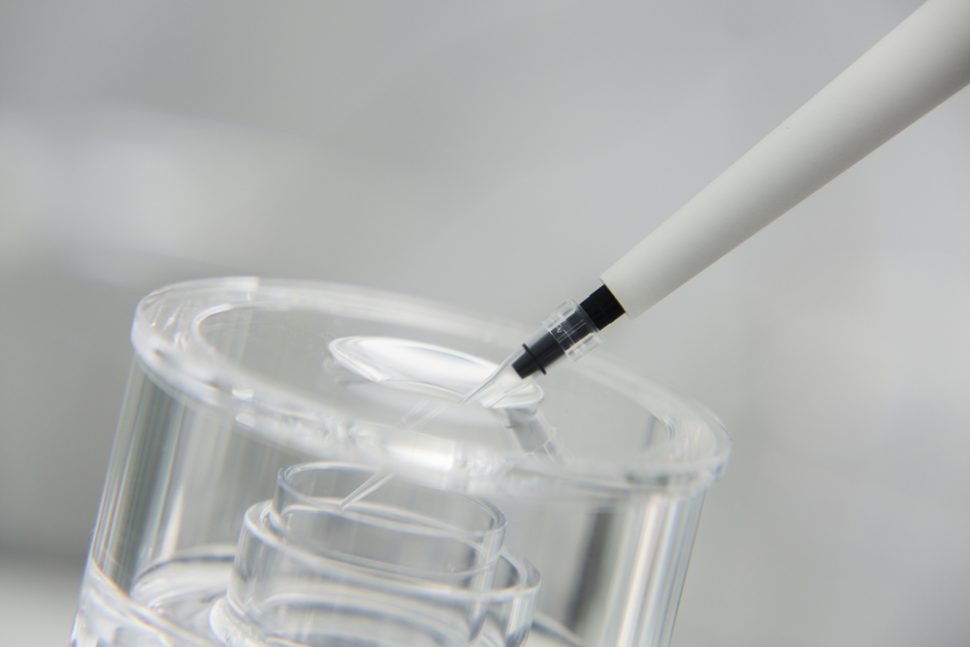
Pipettes are among the most frequently used and most frequently miscalibrated instruments in any laboratory. Volume inaccuracies compound across experiments, leading to data inconsistencies that can invalidate entire studies.
Cryostar recommends pipette calibration every six months under standard use, or more frequently in high-throughput environments. We calibrate single-channel, multi-channel, adjustable, and electronic pipettes across all volume ranges.
Standards applied: ISO 8655, gravimetric calibration method, NIST traceable weights and balances
Scale & Balance Calibration
Accurate mass measurement is foundational to virtually every laboratory process, from reagent preparation to quality control testing. An uncalibrated balance introduces systematic error that propagates through every downstream result.
Cryostar calibrates analytical balances, precision balances, and top-loading scales using certified Class I–IV weights traceable to NIST standards, with on-site service available throughout New York, New Jersey, and Connecticut.
Instruments calibrated: Analytical balances, semi-micro balances, precision balances, top-loading scales, moisture analyzers
Thermocycler (PCR) Calibration
Thermocyclers depend on precise, rapid temperature transitions to produce reliable PCR amplification results. Block temperature uniformity and ramp rate accuracy are critical — inconsistencies across the block can produce variable banding, failed amplification, or false results.
Cryostar calibrates thermocycler block temperatures using NIST traceable probes to verify uniformity and accuracy across all wells.
Instruments calibrated: Gradient thermocyclers, real-time PCR (qPCR) systems, digital PCR systems
pH Meter Calibration
pH meters require regular calibration against reference buffer solutions to maintain measurement accuracy, as electrode performance degrades over time and with use. An incorrectly calibrated pH meter can silently corrupt buffer preparation, cell culture media formulation, and analytical chemistry workflows.
Cryostar calibrates benchtop and portable pH meters across all major manufacturers, with on-site service available.
Refrigerator & Cold Storage Calibration
Laboratory refrigerators storing reagents, antibodies, blood products, and temperature-sensitive pharmaceuticals must maintain stable, verified temperatures.
Cryostar performs temperature mapping and calibration on laboratory refrigerators, pharmacy refrigerators, blood bank units, and walk-in cold rooms — providing complete documentation for FDA, Joint Commission, and CAP accreditation requirements.
Instruments calibrated: Lab refrigerators (2°C–8°C), plasma freezers, blood bank refrigerators, pharmacy refrigerators, walk-in cold storage
Microtome Calibration
Microtomes used in histology and pathology labs must cut tissue sections at precise, consistent thicknesses for accurate slide preparation and diagnosis. Section thickness drift affects staining quality and diagnostic reliability.
Cryostar calibrates rotary, sliding, and cryostat microtomes to manufacturer specifications, serving hospital pathology departments and research labs across the Tri-State Area.
Additional Equipment Calibrated
Cryostar also provides calibration services for the following instruments. Contact us for scheduling and documentation requirements specific to your equipment:
- Thermometers & temperature probes — NIST traceable verification for reference thermometers, RTDs, and type K/T thermocouples
- Barometers & pressure gauges — Used in environmental monitoring and cleanroom applications
- Calipers & micrometers — Dimensional calibration for precision measurement tools
- Electrical data loggers — Temperature and humidity monitoring devices used in storage and transport compliance
- Plate readers & spectrophotometers — Wavelength accuracy and absorbance linearity verification
- Clamp meters & electrical test equipment — For facilities requiring electrical measurement traceability
- Torque wrenches — Calibration for labs with assembly or equipment installation requirements
- Autoclave & sterilization equipment — Temperature, pressure, and cycle verification for sterile processing areas
Don’t see your instrument? Cryostar services a wide range of laboratory equipment across all major manufacturers. Submit a service request or call 1-800-564-5513 and our team will confirm whether we can calibrate your specific instrument and model.
Calibration Standards & Regulatory Compliance
When selecting a calibration provider in New York, the standards your vendor works to aren’t a formality — they determine whether your calibration documentation will hold up during an FDA inspection, a customer audit, or an ISO certification review.
Cryostar Industries performs all laboratory equipment calibration in accordance with the regulatory and accreditation frameworks that matter most to regulated labs in the Tri-State Area.
NIST Traceable Calibration
NIST traceability is the foundation of any credible calibration program. Every measurement Cryostar takes is traceable to the National Institute of Standards and Technology through an unbroken chain of comparisons, each with documented uncertainties. This means your calibration certificates don’t just report a number. They document a measurement that can be reliably connected back to a national reference standard.
Why it matters for your lab: NIST traceability is a baseline requirement in most regulated laboratory environments and is referenced directly in FDA guidance, ISO standards, and pharmaceutical quality agreements. Without it, calibration documentation is difficult to defend in an audit.
What Cryostar provides: All calibration certificates issued by Cryostar include the NIST traceable reference standard used, the calibration uncertainty, and the date of the reference standard’s last calibration — giving your QA team everything needed for a complete traceability record.
ISO/IEC 17025 Accredited Calibration Laboratory
ISO/IEC 17025 is the internationally recognized standard for the competence of testing and calibration laboratories. Accreditation to this standard means an independent body has verified that a calibration lab operates with technically sound procedures, qualified personnel, appropriate equipment, and a quality management system that ensures consistent, reliable results.
Cryostar’s calibration laboratory is ISO 17025 accredited. For regulated industries (particularly pharmaceutical, biotech, and medical device manufacturers) this accreditation is often a contractual or regulatory requirement when selecting a calibration vendor.
What it means in practice: When you receive a calibration certificate from Cryostar’s ISO 17025 accredited lab, you are receiving documentation produced under a quality system that has been independently audited and validated. This is the documentation standard that survives FDA inspections and ISO 13485 supplier qualification audits.
ANSI Z-540 Calibration Standard
ANSI Z-540 (now largely superseded by its successor ANSI/NCSL Z540.3, but still referenced in many pharmaceutical and defense supplier agreements) is the American national standard for the calibration of measuring and test equipment. It defines requirements for calibration intervals, measurement uncertainty, and documentation that go beyond basic NIST traceability.
Who requires it: ANSI Z-540 compliance is commonly specified in pharmaceutical manufacturer supplier qualification programs, government contractor requirements, and quality agreements at facilities operating under rigorous metrology programs. If your lab’s supplier qualification questionnaire asks whether your calibration provider meets ANSI Z-540 or Z540.3 requirements, Cryostar’s calibration procedures are structured to satisfy these requirements.
Why Cryostar cites it: Many calibration providers in the New York area operate to NIST traceability alone. ANSI Z-540 compliance requires additional rigor around measurement uncertainty documentation and calibration interval justification — a meaningful differentiator for labs whose quality systems demand it.
GxP-Compliant Calibration Services
GxP is a collective term covering the Good Practice quality guidelines enforced by the FDA and international regulatory bodies across pharmaceutical, biotech, and clinical environments — including GMP (Good Manufacturing Practice), GLP (Good Laboratory Practice), and GCP (Good Clinical Practice).
Calibration is a core requirement under all GxP frameworks: equipment used to generate regulated data must be demonstrated to be fit for purpose, and that demonstration depends on documented, traceable calibration.
Cryostar’s calibration services are performed and documented in a manner consistent with GxP requirements, including:
- Written calibration procedures aligned with equipment manufacturer SOPs
- Calibration certificates that document pre- and post-calibration measurements, as-found and as-left conditions, reference standards used, and the identity of the technician performing the calibration
- Out-of-tolerance reporting — when equipment is found outside acceptable limits, Cryostar documents the as-found condition before any adjustment, giving your quality team the information needed to conduct an impact assessment on prior results
- Calibration labels affixed directly to each instrument, linking the physical equipment to its calibration record
For GMP facilities: Equipment calibration records are subject to FDA inspection under 21 CFR Part 211 (pharmaceutical manufacturing) and 21 CFR Part 820 (medical device quality systems). Cryostar’s documentation is structured to support these requirements.
FDA 21 CFR Compliance
Two sections of FDA regulation are most directly relevant to laboratory equipment calibration:
21 CFR Part 211.68 requires that automatic, mechanical, and electronic equipment used in pharmaceutical manufacturing and testing be calibrated, inspected, or checked according to a written program designed to assure proper performance. Records of calibration checks must be maintained.
21 CFR Part 820.72 (Quality System Regulation for medical devices) requires that all inspection, measuring, and test equipment be calibrated at defined intervals or before use, against certified equipment with a known valid relationship to nationally or internationally recognized standards.
Cryostar’s calibration documentation is designed to satisfy both requirements, including the written procedure, calibration interval, as-found/as-left data, reference standard traceability, and the signature of the qualified technician performing the service.
ISO 13485 Supplier Qualification
Medical device companies operating under ISO 13485 — the quality management standard specific to the medical device industry — are required to qualify and monitor their external suppliers, including calibration service providers. This means your calibration vendor must be able to demonstrate documented quality procedures, appropriate accreditation, and consistent performance.
Cryostar can provide the documentation your supplier qualification process requires, including quality system information, calibration procedure summaries, and accreditation certificates. Contact us to discuss your specific supplier qualification requirements and we will ensure the right documentation is in place before your first service visit.
A Note on Calibration Certificates & Audit Readiness
Regardless of which regulatory framework governs your facility, every calibration Cryostar performs generates a certificate that includes:
| Certificate Element | Purpose |
|---|---|
| Equipment description, make, model & serial number | Links certificate to specific asset |
| Calibration date & due date | Establishes interval compliance |
| As-found condition (pre-adjustment readings) | Required for GxP impact assessment |
| As-left condition (post-adjustment readings) | Confirms equipment is within tolerance |
| Reference standard used & its NIST traceable certificate number | Establishes traceability chain |
| Measurement uncertainty | Required for ANSI Z-540 and ISO 17025 |
| Technician identification | Required for 21 CFR and GxP audit trail |
| Pass/fail determination | Immediate usability status |
| Calibration label reference number | Links physical equipment to paper record |
This level of documentation isn’t standard practice across all calibration providers in New York. It is standard practice at Cryostar — on every job, for every instrument.
Questions about whether Cryostar’s calibration services meet your facility’s specific regulatory requirements? Our team is familiar with the documentation requirements across pharmaceutical, biotech, healthcare, and medical device environments throughout New York, New Jersey, and Connecticut. Contact us or call 1-800-564-5513 to discuss your compliance needs before scheduling service.
Frequently Asked Questions: Lab Equipment Calibration in New York
How often should laboratory equipment be calibrated?
Calibration frequency depends on the type of equipment, how frequently it is used, and the regulatory environment your lab operates in. As a general rule, most laboratory instruments should be calibrated every six to twelve months. Pipettes used in high-throughput environments typically require calibration every three to six months.
Equipment should also be calibrated in the following situations:
- After any incident involving physical shock or mishandling
- After relocation or reinstallation
- Whenever measurement results are in question
- Prior to any critical analytical process or regulatory submission
OEM documentation for your specific instrument will include a baseline calibration interval recommendation, and your quality system or SOPs may impose more frequent requirements.
Do you offer on-site lab equipment calibration in New York?
Yes. Cryostar Industries provides on-site laboratory equipment calibration throughout New York State, including New York City, Long Island, Nassau and Suffolk Counties, the Bronx, Manhattan, Brooklyn, Queens, Staten Island, Westchester, and Albany. We also serve Northern and Central New Jersey including Piscataway, and Connecticut including Danbury and surrounding areas.
On-site calibration minimizes equipment downtime and eliminates the risk of instruments being put out of specification during transport. For equipment that cannot be calibrated in the field, we also offer in-lab calibration at our ISO 17025 accredited facility on Long Island.
What is NIST traceable calibration and why does it matter?
NIST traceable calibration means that every measurement taken during the calibration process can be linked back to the National Institute of Standards and Technology through an unbroken, documented chain of comparisons, each with stated uncertainties. This traceability is what gives your calibration certificates their legal and regulatory standing.
Without it, there is no way to demonstrate that your equipment measurements are tied to a recognized national standard — which makes the documentation difficult to defend in an FDA inspection, ISO audit, or customer quality review. All calibration work performed by Cryostar Industries is NIST traceable, and every certificate we issue documents the reference standard used, its traceability certificate number, and the associated measurement uncertainty.
What calibration standards does Cryostar comply with?
Cryostar Industries performs laboratory equipment calibration in accordance with the following standards and regulatory requirements:
- NIST traceability — all calibrations traceable to national reference standards
- ISO/IEC 17025 — our calibration laboratory is ISO 17025 accredited
- ANSI Z-540 / ANSI/NCSL Z540.3 — American national calibration standard
- GxP (GMP, GLP, GCP) — documentation structured for regulated pharmaceutical and biotech environments
- FDA 21 CFR Part 211.68 — pharmaceutical manufacturing equipment calibration requirements
- FDA 21 CFR Part 820.72 — medical device quality system calibration requirements
- ISO 13485 — documentation available to support medical device supplier qualification
- CAP and Joint Commission — calibration records structured for healthcare facility accreditation reviews
What is the difference between on-site and in-lab calibration?
On-site calibration is performed at your facility by a Cryostar technician. It minimizes disruption to your operations, eliminates transport risk, and gets your equipment back in service the same day. It is the preferred option for most laboratory instruments and is available throughout New York, New Jersey, and Connecticut.
In-lab calibration is performed at Cryostar’s ISO 17025 accredited calibration laboratory on Long Island. This is appropriate for instruments that require a controlled calibration environment, specialized reference equipment not available in the field, or a higher level of calibration rigor for critical measurements.
Both options produce the same NIST traceable, audit-ready calibration certificate.
What happens if my equipment is found out of tolerance during calibration?
When a Cryostar technician finds that an instrument is outside its acceptable tolerance range, we document the as-found condition — the actual readings before any adjustment is made — before performing any corrective action. This as-found documentation is a critical requirement for GxP-regulated facilities, as it gives your quality team the data needed to conduct an impact assessment on results generated while the equipment was out of tolerance.
After adjustment, we document the as-left condition to confirm the instrument is now within specification. Both the as-found and as-left data appear on the calibration certificate. If the instrument cannot be brought within tolerance through calibration alone, we will advise on repair options.
Which types of laboratory equipment does Cryostar calibrate?
Cryostar calibrates a wide range of laboratory instruments, including:
- CO2 incubators and environmental chambers
- Centrifuges (microcentrifuges, refrigerated centrifuges, ultracentrifuges)
- Pipettes (single-channel, multi-channel, electronic)
- Analytical balances and laboratory scales
- Ultra-low temperature (ULT) freezers
- Thermocyclers and PCR systems
- pH meters
- Laboratory refrigerators and cold storage units
- Microtomes
- Thermometers and temperature probes
- Plate readers and spectrophotometers
- Barometers, pressure gauges, and test equipment
- Calipers, micrometers, and dimensional measurement tools
- Electrical data loggers
- Autoclave and sterilization equipment
If your instrument is not listed, contact us — we service a broad range of equipment across all major manufacturers and can confirm whether we can calibrate your specific model.
Do you provide calibration services for pharmaceutical and biotech laboratories in New Jersey?
Yes. Cryostar serves pharmaceutical manufacturers, biotech research facilities, and contract laboratories throughout Northern and Central New Jersey, including the Piscataway and Edison corridor. Our calibration services are performed in accordance with FDA 21 CFR, GMP, and GxP requirements, and our documentation is structured to satisfy the supplier qualification requirements typical of pharmaceutical quality agreements. We provide on-site calibration to minimize downtime and can schedule around production and laboratory operational requirements.
What does a Cryostar calibration certificate include?
Every calibration certificate issued by Cryostar includes:
- Equipment description, manufacturer, model, and serial number
- Calibration date and next due date
- As-found readings (pre-adjustment)
- As-left readings (post-adjustment)
- Reference standard used and its NIST traceable certificate number
- Measurement uncertainty
- Pass or fail determination
- Identity of the technician who performed the calibration
- Calibration label reference number linking the instrument to its paper record
This documentation is designed to satisfy FDA inspection requirements, ISO 17025 audit requirements, GxP impact assessment needs, and CAP or Joint Commission accreditation reviews.
Does Cryostar offer emergency or same-day calibration services?
Cryostar Industries operates 24 hours a day, 7 days a week, 365 days a year for emergency service. If a critical instrument requires urgent calibration — for example, prior to a time-sensitive analytical run, following an equipment incident, or in advance of a regulatory inspection — contact our dispatch line at 1-800-564-5513 and we will work to get a technician to your facility as quickly as possible. Emergency calibration services are available throughout New York, New Jersey, and Connecticut.